


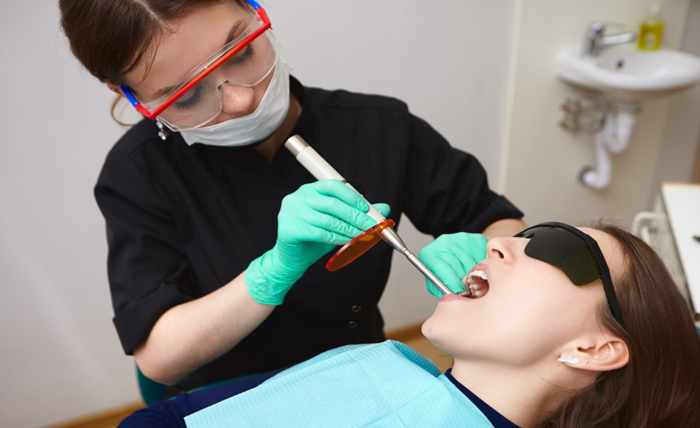
The filling is the most routine restorative procedure in dentistry, and also one of the hardest to price without qualification. What you pay in the UK depends on whether you are seen on the NHS or privately, which material goes into the cavity, and how much of the tooth is involved. That question has taken on a second dimension in recent years: for patients who cannot get an NHS appointment, or who are already weighing up treatment abroad for something larger, it is worth knowing whether adding fillings into an overseas plan makes financial sense.
NHS Tooth Filling Costs in the UK (2026)
| NHS Band | Patient Charge (2026) | What’s Covered |
| Band 1 | £26.80 | Examination, X-rays, scale and polish (no fillings) |
| Band 2 | £73.50 | All fillings needed in one course of treatment, plus Band 1 treatment |
| Band 3 | £319.10 | Crowns, dentures, bridges in addition to Bands 1 and 2 |
Band 2 deserves particular attention because it is genuinely good value and widely misunderstood: the £73.50 charge covers every filling required within a single course of treatment, whether that is one tooth or six. The obstacle is not the price but the door. NHS England data shows millions of patients unable to register with an NHS dentist at all, with waiting lists in some parts of the country running beyond 18 months for new patients.
Private Filling Costs in the UK
| Country / Region | Average Cost | Notes |
| Composite (white) filling — small | £80 – £150 | Per tooth; simple single-surface cavity |
| Composite filling — large/molar | £150 – £300 | Multi-surface or molar cavities requiring more material |
| Amalgam (silver) filling | £60 – £150 | Increasingly rare in private practice; not available on NHS for adults |
| Ceramic inlay or onlay | £400 – £900 | Laboratory-made; stronger than direct fillings for large cavities |
Which Material Is Right?
Composite (tooth-coloured) resin — The default in modern private practice. It bonds chemically to the tooth, so less healthy structure has to be sacrificed than with amalgam, and the aesthetics are excellent. The formulations have improved considerably over the last decade, and a well-placed modern composite is difficult to spot.
Amalgam (silver) — Genuinely durable, and still regarded as clinically appropriate for large back-tooth cavities in some guidelines. It has become uncommon in UK private practice for two reasons: patients prefer tooth-coloured restorations, and environmental regulation is phasing it out.
Ceramic inlay or onlay** — **Made in a laboratory and bonded into the prepared cavity. Where a direct filling would end up covering more than half the biting surface, an inlay or onlay is the stronger answer. It costs two appointments but lasts considerably longer.
Gold — Exceptionally long-lived and now rarely requested, chiefly on aesthetic grounds and cost. The patients who still ask for it are usually those who have fractured ceramic restorations before.
When a Filling Is the Wrong Answer
Some teeth cannot be reliably restored with a filling at all — badly broken-down teeth, cracked teeth, and teeth that have had root canal treatment. In those cases a crown covers and protects the whole structure instead of patching part of it. The decision belongs to the dentist, who is weighing how much sound tooth remains against the risk of fracture under bite load. A useful rule of thumb: once more than half the original tooth has been lost to decay or previous fillings, a crown usually beats a larger filling.
For anyone already considering Turkey for other work, this is the single most common revision to a treatment plan once the mouth is examined properly. The step up from a large composite to a zirconia crown costs comparatively little there, and buys a substantial gain in strength and longevity.
Filling Costs in Turkey
| Country / Region | Average Cost | Notes |
| Composite filling (small) | £50 – £80 | Per tooth; simple single-surface cavity |
| Composite filling (large/molar) | £80 – £130 | Multi-surface or molar cavities |
| Ceramic inlay | £200 – £225 | Laboratory-made; significantly less than UK equivalent |
Fillings are rarely the reason anyone flies to Turkey. What tends to happen is that patients travelling for implants, crowns or veneers have any outstanding fillings dealt with during the same trip, adding very little to the overall bill. The per-filling saving on its own is modest; the real value is closing out every outstanding piece of work in one visit rather than paying for a second trip later.
The Wider Picture: Treating Everything at Once
Patients who have postponed dental care for years — whether through cost or lack of access — often arrive with a combination of extensive decay, failing old restorations and missing teeth. That combination frequently makes them better candidates for full-arch treatment than for a long list of individual repairs, because replacing a failing dentition can be more predictable than restoring it tooth by tooth. Dental Harmony Turkey offers the all on 6 dental implants in antalya protocol for patients in that position, at per-arch pricing of £3,500–£4,500 in 2026 — a fraction of what the same treatment costs in the UK.
Frequently Asked Questions
How long does a filling last? Composite generally gives 7–10 years. Ceramic inlays and amalgam can run 15–20 years or longer, given good oral hygiene and regular check-ups.
Does getting a filling hurt? Everything but the smallest cavities is done under local anaesthetic, so the procedure itself is painless. Mild sensitivity for a day or two afterwards is common and settles on its own.
Can I replace an amalgam filling with a white composite? Usually yes. The deciding factor is how much healthy tooth remains once the old filling is out, and how large the original cavity was.
Final Thoughts
NHS filling charges remain one of the better-value elements of UK dentistry — for those who can actually access them. Private costs continue to climb, and for anyone whose needs extend well beyond a couple of fillings, treatment abroad deserves genuine consideration rather than dismissal. Dental Harmony Turkey is an Affordable Dental Clinic in Antalya handling both routine and complex cases for international patients, with itemised pricing and English-language coordination throughout.